Friday, September 26, 2008

NO TRESPASSING " AUTOMOTIVE MOTORCYCLE MECHANIC WORKING VIOLATORS WILL BE CRUSHED " PARKING SIGN OCCUPATIONS
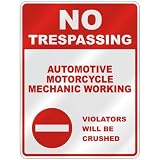
This sign is made of indoor/outdoor weatherproof.040 polystryrene (plastic as thick as 2 credit cards on top each other).This sign comes with rounded corners and one hole at each end for hanging.This is a great gift


This is the first in a series of articles exploring motorcycle tire basics and various basic dynamic characteristics of the handling behavior of motorcycles. Overall this is a very complex subject
and needs a good level of mathematics and physics to properly understand what's happening.
However, in these articles I'll try and explain the basics with the absolute minimum of mathematics,
but where this is unavoidable I'll not go beyond simple trigonometry. For those that are unhappy
with any mathematics at all, don't worry, just skip those parts and the rest should still prove useful.
I'll try and illustrate the mechanics with many sketches and graphs.

It seems incredible that just two small contact patches of rubber, can support our machines and
manage to deliver large amounts of power to the road, whilst at the same time supporting cornering
forces at least as much as the weight of the bike and rider. As such the tires exert perhaps the single
most important influence over general handling characteristics, so it seems appropriate to study their
characteristics before the other various aspects of chassis design.
When Newton first expounded to the world his theories of mechanics, no doubt he had on his mind,
things other than the interaction of motorcycle tires with the road surface. Never-the-less his
suppositions are equally valid for this situation. In particular his third law states, "For every force there
is an equal and opposite force to resist it." or to put it another way "Action and reaction are equal and
opposite."

Relating this to tire action, means that when the tire is pushing on the road then the road is pushing
back equally hard on the tire. This applies equally well regardless of whether we are looking at
supporting the weight of the bike or resisting cornering, braking or driving loads.
What this particular law of Newton does not concern itself with, is which force is the originating one nor
indeed does it matter for many purposes of analysis. However, as a guide to the understanding of
some physical systems it is often useful to mentally separate the action from the reaction.
The forces that occur between the ground and the tires determine so much the behaviour of our
machines, but they are so often taken for granted. tires really perform such a multitude of different
tasks and their apparent simplicity hides the degree of engineering sophistication that goes into their
design and fabrication. Initially pneumatic tires were fitted to improve comfort and reduce loads on
the wheels. Even with modern suspension systems it is still the tires that provide the first line of
defence for absorbing road shocks.
To explore carcass construction, tread compound and tread pattern in great detail is beyond the scope
of this book. Rather we are concerned here with some basic principles and their effects on handling
characteristics.

Weight Support

The most obvious function of the tire is to support the weight of the machine, whether upright or
leaning over in a corner. However, the actual mechanism by which the air pressure and tire passes
the wheel load to the road is often misunderstood. Consider fig. 1, this sketch represents a slice
through the bottom of a rim and tire of unit thickness with an inflation pressure of P. The left hand
side shows the wheel unloaded and the right hand side shows it supporting the weight F. When
loaded the tire is compressed vertically and the width increases as shown, perhaps surprisingly the
internal air pressure does not change significantly with load, the internal volume is little changed.
At the widest section (X1) of the unloaded tire the internal half width is W1, and so the force normal to
this section due to the internal pressure is simply 2.P.W1 . This force acts upwards towards the wheel
rim, but as the pressure and tire width are evenly distributed around the circumference the overall
effect is completely balanced. This force also has to be resisted by an equal tension (T) in the tire
carcass.

The loaded tire has a half width of W2 at it's widest section (X2) and so the normal force is 2.P.W2 .
Therefore, the extra force over this section, when loaded, is 2.P.(W2 W1) but as the tire is only
widened over a small portion of the bottom part of the circumference, this force supports the load F.
The above describes how the inflation pressure and tire width increase produce forces to oppose the
vertical wheel loading, but does not completely explain the detail of the mechanism by which these
forces are transferred to the rim. The bead of a fitted tire is an interference fit over the bead seat of
the wheel rim, which puts this area into compression, the in-line component of the side-wall tension
due to the inflation pressure reduces this compression somewhat. This component is shown as F1 on
the unloaded half of F1 = T.cos(U1). The greater angle U2 of the side-wall when loaded means
that the in-line component of the tension is reduced, thereby also restoring some of the rim to tire
bead compression. This only happens in the lower part of the tire circumference, where the widening
takes place. So there is a nett increase in the compressive force on the lower rim acting upward, this
supports the bike weight. The nett force is the difference between the unloaded and loaded in-line
forces,

F = T.(cos( U1) -cos(U2))

The left hand side shows half of an inflated but
unloaded tire, a tension (T) is created in the carcass by
the internal pressure. To the right, the compressed and
widened shape of the loaded tire is shown.

Suspension Action

In performing this function the pneumatic tire is the first object that feels any road shocks and so acts
as the most important element in the machine's suspension system. To the extent that, whilst
uncomfortable, it would be quite feasible to ride a bike around the roads, at reasonable speeds with no
other form of bump absorption. In fact rear suspension was not at all common until the 1940s or 50s.
Whereas, regardless of the sophistication of the conventional suspension system, it would be quite
impractical to use wheels without pneumatic tires, or some other form of tire that allowed
considerable bump deflection. The loads fed into the wheels without such tires would be enormous at
all but slow speeds, and continual wheel failure would be the norm.
A few figures will illustrate what I mean:--Assume that a bike, with a normal size front wheel, hits a 25
mm, sharp edged bump at 190 km/h. This not a large bump.
With no tire the wheel would then be subject to an average vertical acceleration of approximately
1000 G. (the peak value would be higher than this). This means than if the wheel and brake
assembly had a mass of 25 kg. then the average point load on the rim would be 245 kN. or about 25
tons. What wheel could stand that? If the wheel was shod with a normal tire, then this would have at
ground level, a spring rate, to a sharp edge, of approx. 17-35 N/mm. The maximum force then
transmitted to the wheel for a 25 mm. step would be about 425-875 N. i.e. less than four thousandths
of the previous figure, and this load would be more evenly spread around the rim. Without the tire the
shock loads passed back to the sprung part of the bike would be much higher too. The vertical wheel
velocity would be very much greater, and so the bump damping forces, which depend on wheel
velocity, would be tremendous. These high forces would be transmitted directly back to bike and rider.
The following five charts show some results of a computer simulation of accelerations and
displacements on a typical road motorcycle, and illustrate the tire's significance to comfort and road
holding. The bike is traveling at 100 km/h. and the front wheel hits a 0.025 metre high step at 0.1
seconds. Note that the time scales vary from graph to graph.
Three cases are considered:

With typical vertical tire stiffness and typical suspension springing and damping.

With identical tire properties but with a suspension spring rate of 100 X that of the previous.

With tire stiffness 100 X the above and with normal suspension springing.

So basically we are considering a typical case, another case with almost no suspension springing and
the final case is with a virtually rigid tire. Structural loading, comfort and roadholding would all be adversely
affected without the initial cushioning of the tire. Note that the above charts are not all to the same time scale,
this is simply to better illustrate the appropriate points.

This shows the vertical displacement of the front wheel. There is little difference between the maximum
displacements for the two cases with a normal tire, for a small step the front tire absorbs most of the shock. However,
in the case of a very stiff tire, the wheel movement is increased by a factor of about 10 times. It is obvious that the tire
leaves the ground in this case and the landing bounces can be seen after 0.5 seconds.

These curves show the vertical movement of the C of G of the bike and rider. As in Fig 1 it is clear that the stiff tire
causes much higher bike movements, to the obvious detriment of comfort.

Demonstrating the different accelerations transmitted to the bike and rider, these curves show the vertical
accelerations at the C of G. Both of the stiffer tire or stiffer suspension cases show similar values of about 5 or 6 times
that of the normal case, but the shape of the two curves is quite different. With the stiff suspension there is little
damping and we can see that it takes a few cycles to settle down. The second bump at around 0.155 seconds is when the
rear wheel hits the step, this rear wheel response is not shown on the other graphs for clarity.

Front wheel vertical acceleration for the two cases with a normal tire. The early part is similar for the two cases,
the suspension has little effect here, it is tire deflection that is the most important for this height of step. As in Fig 5 the
lack of suspension damping allows the tire to bounce for a few cycles before settling down.

As in these curves are of the wheel acceleration, the values of the normal case are overwhelmed by the stiff
tire case, with a peak value of close to 600 G compared with nearly 80 G normally. Again note the effects of the landing
bounces after 0.5 seconds. This high acceleration would cause very high structural loading.

As the tire is so good at removing most of the road shocks, right at the point of application, perhaps it
would be worth while to consider designing it to absorb even more and eliminate the need for other
suspension. Unfortunately we would run into other problems. We have all seen large construction
machinery bouncing down the road on their balloon tires, sometimes this gets so violent that the
wheels actually leave the ground. A pneumatic tire acts just like an air spring, and the rubber acts as
a damper when it flexes, but when the tire is made bigger the springing effect overwhelms the
damping and we then get the uncontrolled bouncing. So there are practical restraints to the amount of
cushioning that can be built into a tire for any given application.

Effects of Tire Pressure

Obviously, the springing characteristics mentioned above are largely affected by the tire inflation
pressure, but there are other influences also. Carcass material and construction and the properties
and tread pattern of the outer layer of rubber all have an effect on both the springing properties and
the area in contact with the ground (contact patch). Under and over inflation both allow the tire to
assume non-optimum cross-sectional shapes, additionally the inflation pressure exerts an influence
over the lateral flexibility of a tire and this is a property of the utmost importance to motorcycle
stability. Manufacturers' recommendations should always be adhered to.

The influence of tire pressure on the vertical stiffness of an inflated tire, when loaded on
a flat surface. These curves are from actual measured data. Note that the spring rate is close to
linear over the full range of loading and varies from 14 kgf/mm. at 1.9 bar pressure to 19 kgf/mm. at
2.9 bar. The effective spring rate when the tire is loaded against a sharp edge, such as a brick, is
considerably lower than this, and is more non-linear due to the changing shape of the contact area as
the tire "wraps" around the object.

This spring rate acts in series with the suspension springs and is an important part of the overall
suspension system. An interesting property of rubber is that when compressed and released it
doesn't usually return exactly to it's original position, this is known as hysteresis. This effect is shown
only for the 1.9 bar. case, the curve drawn during the loading phase is not followed during the
unloading phase. The area between these two curves represents a loss of energy which results in
tire heating and also acts as a form of suspension damping. In this particular case the energy lost
over one loading and unloading cycle is approximately 10% of the total stored energy in the
compressed tire, and is a significant parameter controlling tire bounce.

Vertical stiffness of a standard road tire against a flat surface at different inflation pressures. This data is from an
Avon Azaro Sport II 170/60 ZR17. The upward arrows indicate the compression of the tire and the 2nd line with the
downward arrow (shown only at 1.9 bar for clarity) shows the behaviour of the tire when the load is released. The
shaded area between the two lines represents a loss of energy called hysteresis. This acts as a source of suspension
damping and also heats the tire. (From data supplied by Avon tires.)

Lateral stiffness of the same tire shown in fig. 9. The vertical load was constant at 355 kgf. and the wheel was
kept vertical. As expected the tire is somewhat stiffer with the higher inflation pressure but loses grip or saturates at the
lower lateral load of 460 kgf. compared to 490 kgf. at the lower pressure. (From data supplied by Avon tires.)

Contact Area

The tire must ultimately give it's support to the bike through a small area of rubber in contact with the
ground, and so "contact patch area = vertical force average contact patch surface pressure". This
applies under ALL conditions.

The contact patch surface pressure is NOT however, the same as the inflation pressure, as is
sometimes claimed. They are related but there are at least four factors which modify the relationship.
Carcass stiffness, carcass shape, surface rubber depth and softness, and road surface compliance. If
we have an extremely high carcass stiffness then inflation pressure will have a reduced influence.
Let's look at this in a little more detail and see why:

If a tire was made just like an inner tube, that is from quite thin rubber and with little stiffness unless
inflated, then the internal air pressure would be the only means to support the bike's weight. In this
case the contact patch pressure would be equal to that of the internal air pressure. For an air
pressure of 2 bar and a vertical load of 1.0 kN. Then the contact area would be 5003 sq.mm. If we
now increased the air pressure to say 3 bar the area would fall to 3335 sq.mm.

Let's now imagine that we substitute a rigid steel tubular hoop for our rim and tire, the area in contact
with the ground will be quite small. If we now inflate the hoop with some air pressure, it doesn't take
much imagination to see that, unlike the inner tube, this internal pressure will have a negligible effect
on the external area of contact. Obviously, a tire is not exactly like the steel hoop, nor the inner tube,
but this does show that the carcass rigidity can reduce the contact surface area as calculated purely
from inflation pressure alone.

I did 2 sets of tests. For the first I kept the tire inflation pressure constant at 2.4 bar and varied the tire
load between 178 and 1210 N. (allowing for the weight of the glass and wooden beams). Secondly, I
keep a constant load of 1210 N. and tried varying the inflation pressure between 2.4 to 1 bar.
Even with a generous allowance for experimental error the effects are clear. The graphs show that
the results appeared to fit reasonably well to a smooth line, there wasn't much scatter.

Point (1) on the curve with constant inflation pressure, shows how the actual contact patch pressure is
lower (just over half) than the inflation pressure, or in other words the contact area is greater. This is
due to the rubber surface compliance, thus this is more important at low vertical loads, whereas
carcass stiffness became more important as the load rose as shown by points (3) to (6) where the
actual contact pressure is higher than the air pressure, i.e. reduced area of contact.

Measurement setup. Various weights were placed on the end of a beam, which also loaded the tire via a
thick plate of glass. The beam was arranged to apply the load to the tire with a 4:1 leverage. So a 25
kgf. weight would load the tire with 100 kgf. By tracing over the glass the contact area
was determined.

The top plot shows the measured contact patch pressure at various wheel loads for a constant inflation pressure
of 2.4 bar. The lower curves show the contact pressure at various inflation pressures for a fixed load of 1210 N. The
numbers at the data points correspond with the contact area tracings in the previous sketch. The plain line on each plot
shows the case of the contact patch pressure being equal to the inflation pressure.

The carcass stiffness helps to support the machine as the air pressure is
reduced, the contact patch pressure being considerably higher than the inflation pressure. It looks as
though the two lines will cross at an air pressure of about 3.5 bar. (although this was not tested by
measurement), at which point the surface rubber compression will assume the greatest importance.
This is as per the steel hoop analogy above.

We can easily see the two separate effects of surface compliance and carcass stiffness and how the
relative importance of these varies with load and/or inflation pressure.

These tests were only done with one particular tire, other types will show different detail results but
the overall effects should follow a similar pattern.

Area Under Cornering

Does cornering affect tire contact area?
Let's assume a horizontal surface and lateral acceleration of 1G. Under these conditions the bike/rider
CoG will be on a line at 45 to the horizontal and passing through the contact patch. There will a
resultant force acting along this line through the contact patch of 1.4 times the supported weight.

This force is the resultant of the supported weight and the cornering force, which have the same
magnitude, in this example of a 45 lean. The force normal to the surface is simply that due to the
supported weight and does NOT vary with cornering force. The cornering force is reacted by the
horizontal frictional force generated by the tire/road surface and this frictional force is "allowed" by
virtue of the normal force.

Therefore, to a first approximation cornering force will NOT affect the tire contact area, and in fact this
case could be approximated to, if we were just considering the inner tube without a real world tire.
However in reality, the lateral force will cause some additional tire distortion to take place at the
road/tire interface and depending on the tire characteristics, mentioned above, the contact area may
well change.

Another aspect to this is of course the tire cross-sectional profile. The old Dunlop triangular racing
tire, for example, was designed to put more rubber on the road when leant over, so even without tire
distortion the contact patch area increased, simply by virtue of the lean angle.

by Ray Taylor

http://www.CarsNet.com/motorcycle

Ray Taylor owns the real world San Diego Auto Swap and also owns http://www.CarsNet.com and http://www.SanDiegoAutoSwap.com

cheap plasma TV

Panasonic TH-50PX60U 50-Inch Plasma HDTV

The TH-50PX60U 50" Diagonal Plasma HDTV gives you deep blacks, bright whites and 29 billion colors -- it's an image so close to real life, you'll swear you were in your favorite programs instead of just watching them. Enjoy crisp, lifelike details with the up to 10,000:1 contrast ratio. Deep blacks provide excellent shadow detail during dark scenes, while brilliant whites render bright scenes with vivid realism. Receive and view local over-the-air broadcasts in stunning HD, using the built-in HDTV tuner. You can even share your JPEG photos taken with the built-in SD card slot. Features a width-to-height ratio similar to movie theater screens, providing a theater-like experience at home. View HDTV broadcasts and widescreen DVDs the way they were meant to be seen. Native Resolution - 1366 x 768 Contrast Ratio - Up to 10,000 - 1 Progressive Scan Video Noise Reduction Digital Comb Filter Color Purity Optimizer (3D Color Management) Two 20-watt, 8 ohm speakers -- 70Hz - 17kHz, 10%THD Surround Sound Motion Pattern Noise Reduction BBE ViVA HD3D Sound Standard NTSC tuner ATSC/QAM (SDTV and HDTV broadcasts) SD Card Slot&Photo Viewer HDMI-HDCP Interface - 2, in rear Analog Audio Input (for HDMI) - 1 rear Composite Video Input - 3 (2 rear, 1 front) S-Video Inputs - 3 (2 rear, 1 front) Audio Input (for Video) - 3 (2 rear, 1 front) Rear Inputs/Outputs - 2 Component Video (YPbPr), 2 Component Audio out, 1 Composite&Audio out On-screen display languages - English/Spanish/French Timers - Sleep/On/Off Built-in closed-caption decoder Video Input Labeling V-Chip Program Lockout Includes remote control&pedestal stand Unit Dimensions(HxWxD) - 32.2 x 47.6 x 3.7 Unit Weight - 89.5 lbs
Customer Review: Don't buy this product!
Good - The picture is fantastic. Bad - I had to have it repaired 32 days after I bought it. Good thing it was still under warranty. 18 months after I bought it and now out of warranty,it developed a thin black horizontal line all the way across the screen about 8" up from the bottom. Cost to repair - $1600 !!!! This is more than I paid for it. Poor quality like this for a product that is this expensive is absolutely inexcusable.
Customer Review: Stunning
I have other plasmas, but this is the best picture I've seen. Excellent value. If you spend twice as much you can probably get a 1080p that has a better picture, but that will only have value with bluray because cable and satellite won't give you enough resolution now to push this TV.


I recently purchased a new clock radio, the Sony Dream Machine, to wake me up in the morning for work. The old clock radio we had was thrown out in disgust because it was so irritating, and the buttons were not working properly from repeated frustrated beatings when I was trying to set the time.

The Sony Dream Machine is pretty standard looking, not that expensive, and has large green numbers that can be seen OK in the day, and are not too bright in the night.

It's best feature is a little paddle switch with which you can adjust the alarm time up and down. So if you want to get up 15 minutes earlier one day because the CEO is coming to visit your office, you can easily adjust it and then just adjust it up 15 minutes, back to what it was the next evening. You don't have to cycle through 24 hours, in minutes, all 1440 of them, like most other cheap clock radios.

Setting the time is the same. You can change the hours and minutes forward and backward, and not just in one direction, which is marvellous!

You can be woken up with a choice of either radio (fm and am) or buzzer, and you can switch the alarm off.

Another nice feature is that you just touch a button on the top of the radio to switch the radio on, and another button to switch it off. No horrible slider switches. This same button is used to switch the alarm off when it wakes you up. There is also another very large rectangular button to put the alarm into snooze mode, which gives you 10 minutes more sleep time every time you push it. If you push it twice in quick succession it will let you snooze for 20 minutes before waking you up. There's a lot of common sense in this radio!

The radio has a little lithium battery for retaining your settings during power failures. It should last about 5 years.

It also has a daylight saving button, which adds an hour to the time, to put the radio in summer time mode.

I've bought quite a number of clock radios in the past, and this is the first one I've actually liked. It really is a brilliant little machine, and whoever designed it has obviously put a lot of thought into it's functions.

I'm very happy, and no one is paying me to say this!

Duncan Kelly

For more info from this author, be sure to visit http://wrinklyo.googlepages.com
Free information on things that can help and encourage, and a lot of other info !
LIFE CHOICES:
Improve Marriages. Teenagers. Mental Health.
TV, ENTERTAINMENT and MAKING MONEY:
Learn about WiMax. News and info about Digital TV and broadcasting.
ACRONYM Meanings.
Share Trading.
FREE STUFF

SOFTWARE. A couple of handy applications for home use.

PHOTOS- Scenery from South Africa.
Please Come and Visit the Wrinklyo Web Node at http://wrinklyo.googlepages.com

cheap plasma TV

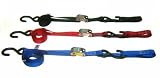
Motorcycle Trailer Tie Down 1 x 72 Heavy Duty Soft Tie

You are buying a brand new pair of heavy duty tie-down from "Pit Posse". 4500 lb. test nylon 1500 lb. b/s Heavy duty 3/8" "S" hook with vinyl coating 6' long and 1" wide Has a soft loop built in, as well as coated hooks to prevent scratching handlebars Available in Black, Blue or Red Lifetime Warranty Our commitment to bringing the finest quality products at the most affordable price is unsurpassed


The wintriness of the weather can choke even the engine of your bike. The winters are too harsh for the motorcycle riders. The exposure to the chill of winters and the freezing winds is unbearable for the rider. To add more to the trouble, under these conditions rider's hands are likely to be frigid. This could prove dangerous as the rider may loose control over the motorcycle. Motorcycle gloves are very useful in these situations.

The motorcycle gloves now come with battery-heated options too. This type of clothing is very effective to combat the iciness in the weather. It gives endurance against the harsh weather. These motorcycle gloves are quite different from the ordinary pair of hand gloves. These are among the most advanced sets of motor biking gear. They comprise of battery powered heat element. This weatherproof gear is an amalgam of good-looking motorcycle gloves and battery heating technology.

The design and material of motorcycle gloves does not allow dirt and frosty air to enter inside them. Just in case, the moisture inside hand gloves trouble you or gives a disgusting feel. It dries up with the inner heat of the gloves and escapes. For maximum riding comfort, the design of gloves is perfect to grip the ends of motorcycle handle bar.

Moreover, these gloves are waterproof and restrict the entry of moisture or snow. The motorcycle gloves are wind-proof too, the cool wind will not permeate into the gloves. In freezing weather, the fingers become frigid and your grip over the handle might become loose. You must choose the gloves available with finger heater technology. The fingers come in first contact with the icy winds. This technology makes the outside chill ineffective to give a freezing effect. Motorcycle gloves are there to ensure optimum winter comfort and riding pleasure to the motorcyclists. Why should only car owners have all the fun during winters?

Author: James is a perfect professional writer for personalised gifts store. He has won appreciation for his good writings on heated motorcycle gloves for http://www.realshopping.co.uk/ "UK Shopping Portal".

cheap plasma TV

Black Widow Folding Adjustable Swing Arm Motorcycle Race Stand

The new Black Widow folding adjustable swing arm motorcycle race stand is the perfect solution for quickly lifting up the rear of your motorcycle for servicing your drive chain or rear tire. The unique fold up design allows the motorcycle stand to store flat or hang on the wall when not in use. This ultra portable motorcycle stand is great for home, shop, or track use and unlike other swingarm stands, takes up almost no room when not in use. Quickly lift your bike in the paddock between races or at home for drive line maintenance or tire removal. The Spring loaded adjustable rubber coated pads allow this motorcycle race stand to fit most sport bikes and dirt bikes on the market.Heavy duty 1-1/4 inch steel tubing and locking channels allow this motorcycle stand to be very stable for a folding stand. The Black widow motorcycle race stand also has and elevated rear handle to allow for easy lifting of the bike and dual 2 inch casters for easily rolling the biker back onto the stand. When you have to lift your sport bike or dirt bike in a hurry, the Black Widow motorcycle race stand is the perfect solution to get the job done.


The first ever petroleum-powered vehicle appeared in 1885 and was a motorised bicycle. Since then, motorised vehicles have climbed to prominence within society. Following that first motorbike were cars, aeroplanes, motorboats and other modes of transport that are essential in today's society.

Motorcycles saw a swift advance in development from inception and it wasn't long before the first motorbike races were being held which, in turn, gave the incentive to produce more powerful vehicles. In only 30 years from the first motorised bicycle's creation, motorbike manufacturing had become an art. They weren't just bikes with engines affixed; they were specifically-designed to be enduring, high-speed and reliable.

During the Second World War, motorbikes were exploited for military use, due to them being small, fast and transportable. Since then, the motorbike switched to a more leisurely vehicle, associated with youth, freedom and a particular carefree lifestyle that still largely surrounds it even today - a remainder from the '60s.

The motorbike now had its own special place and only continued to grow in popularity and design. Though frequently viewed as dangerous, motorcycles are vastly popularised due to their image and sporting opportunities, as well as their convenience. Being much smaller than cars, motorbikes are good for city travelling as, like pedal cycles, they can weave through traffic and skip queues. If safely-ridden with a watchful eye kept on larger-vehicles, motorcycles can prove to be the most efficient way of moving through cities.

As for the country, motorbikes use less fuel and therefore can cover a greater distance between fill-ups. Despite not having room for luggage, for straight journeys requiring little extra to carry, motorbikes can be excellent forms of transport - again skipping traffic jams that plague most car drivers during peak hours and at accident zones.

Motorbike racing is a strong sport. It has many different branches, from Grand Prix tarmac racing to cross country, as well as drag racing. Racing is very competitive and varies from speed to endurance, including Enduro races which require competitors to cross checkpoints at exact times - getting penalised for being early or late. These off-road competitions can last between three and four hours - and even longer.

Whatever reason people are buying motorcycles for, be it sport, serious transport or for the image and ideals the vehicle carries with it, there is a huge variety of options available. The market is packed with developers creating bikes for all sorts of activities.

If you're looking to buy a motorbike, it's important to research thoroughly what style best suits your purposes. The huge roaring beasts zipping past you on the motorway aren't always the best for manoeuvring through cities - and they're certainly not the best for cross-country racing. In any case, ensure you have a valid motorbike license, test-ride, shop around and get some decent bike insurance - and you're ready to let rip!

Paul McIndoe writes for a digital marketing agency. This article has been commissioned by a client of said agency. This article is not designed to promote, but should be considered professional content.

cheap plasma TV

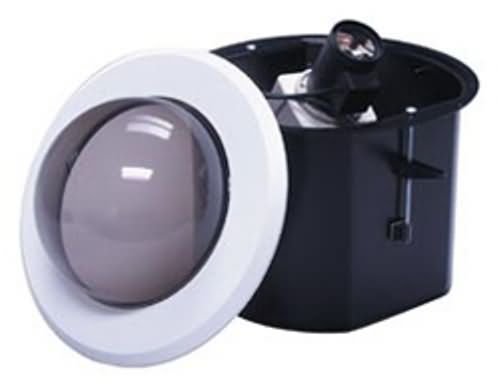
Panasonic PIC254L2DA

Panasonic PIC254L2DA DAY/NIGHT INDOOR FIXED CAMERA PAK, WV-CP254, 2.7-13.5MM LENS, IN-CEILING DOME HOUSING


We all know what bass can do to a movie soundtrack. It can create drama, danger, even a feeling of strength depending on the visuals that go along with it. Bass is one of the most important elements of any audio format because it provides balance and contrast to the overall score of a movie, television show, even commercial. Quality bass in a sound system is impressive while not being overpowering.

In a 5.1 surround sound system, one of the most common for home theater installations, the '.1' is the bass. The speaker for the bass sounds on a soundtrack is called a subwoofer. Lower frequency sound waves use a larger diaphragm to move the amount of air it takes to make these sounds. While smaller speakers can produce these lower frequency waves, they typically cannot produce the kind of quality that one would expect from a quality theater. Smaller speakers can often sound tinny when trying to produce these lower sounds. Large home theatre speaker towers are capable of handling this part of the soundtrack though it may require the reduction of sound quality from the mid and high range frequency speakers.

Choosing a good sound system with a quality bass speaker is not impossible, even for people who do not have a lot of experience. First, start with the subwoofer. Homeowners will need to consider whether they require a passive sub or an active woofer. A passive subwoofer does not need a separate power supply. Rather it uses power from the same amp that is driving the other home theatre speakers. Volume from the amplifier can usually be controlled, there is less control overall with a passive sub. An active sub has a separate power supply. This means that the signal received from the amplifier/receiver is enhanced by the subwoofer itself, without taking any of the power from the other speakers.

Once you have your home theater subwoofer and other speakers picked out, lay them out to get the best sound from each. Bass sound is omni-directional, meaning that it goes out from the speaker in all direction. To decide where to place the subwoofer, put it in the same position that you will be sitting in, whether it is on the couch facing the television screen or in a home theater chair. Turn on a favorite film then move around your room and listen. Find the spot that the bass sounds best and move your subwoofer to that location. It can be set on the ground, on a shelf or off of a wall depending on where you feel the best low tone sound is heard. Since the sounds are going out and bouncing around the room in roughly the same direction, the sound should be great when you get it into place.

We've all heard the laments of mothers and fathers forced to deal with the incessant thumping and pounding of boom box bass lines from their adolescent's car or room. There is something to say for the potential for this phenomenon to occur in a home theater as well. While walls, ceiling and floor will generally block high sound frequencies from leaving the room, they can actually increase the volume of the lower range sounds. While laying out your speakers, try to also find the right volume balance for all frequencies that your family can enjoy the sound quality a bass can provide without driving your neighbors crazy.

~Ben Anton, 2008

Ben Anton lives in Portland, OR and writes for Ronny's 5th St. Audio Vision.
We invite you view the best in home subwoofers for theaters from vendors like Dali and Quad at Ronny's speaker, home theater and accessories store.

cheap plasma TV

Motorcycle Mayhem X

The "Motorcycle MayhemX" DVD offers uncompromising action with tortuous curves at 120 mph, flying of the ramp and heroes of the dirt. It's set to music from cutting edge LA bands and includes Seth Enslow, Tommy Clowers, Chris Carr, Bubba Blackwell, Dana Creech, Joey Cisco, and many more.


Motorcycles are a bundle of energy, if there was ever one, condensed tightly into the smallest space. With all the trappings of modern man it makes sense to make the ride as easy and comfortable as possible. The lights, blinkers, indicators, audio gizmos and whatnots of technological advances that flood man in this age and time all demand clean power to be fed incessantly. And the most popular and reliable source that has served the purposes most conveniently and adequately is the motorcycle battery. It is capable of supplying increasingly larger and maintenance free DC power without lots of fuss.

Motorcycle batteries come in as many shapes, sizes and power capacities as the number of motorcycles donning the roads. Each machine's demands vary so very much from that of the others that the manufacturers of motorcycles opt to have batteries from the battery manufacturers. The charging rates of the motorcycle batteries, the discharge rate, the duration and optimum amperage and voltage of discharge define the electrical properties that differentiate each battery from one another.

The electrolyte, meaning in chemical terms the acid that goes into making the charges constituting the current that makes things work, like the lights, the blinkers and even used for spurring the engine to life instead of conventional kick-start, feed the electrical power generated is one of the most common types of batteries found in motorcycles.

It would do a world of good for motorcycle riders to be informed and aware of the ratings of the batteries that reside in their machines. Being educated about the periodic maintenance and top-up that the motorcycle battery requires would go a long way in ensuring longer life and consistent performance from the batteries.

It is also equally important to check the specific gravity and voltage levels to avoid irritating inconveniences. As the days wear on one could find salt deposits on the terminals that grip the electrodes (made of lead generally). Cleaning them periodically would save valuable contact assurance and also contribute to longer life of the battery.

To sum it all- know your make of motorcycle battery. It will in all probabilities vary with each motorcycle make. Be educated about the periodic maintenance it demands. Don't overcharge it or, on the other hand let the battery go into deep discharge. Clean the terminals if and when required. Enjoy the multiple benefits that the batteries can offer just by being aware.

Victor Epand is an expert consultant about motorcycle gear, used motorcycle parts, and used car parts. When shopping for motorcycle gear or used parts, we recommend only the best stores for motorcycle batteries and used motorcycle batteries.

cheap plasma TV

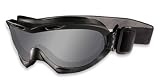
Wiley X Nerve Motorcycle riding goggles - package of smoke/grey lenses/Matte black frame

compact ballistic goggle provides superior eye protection in the harshest and most critical situations faced by today's military and law enforcement. Newly developed Top DownTM ventilation system keeps goggle fog free. Low profile design is night vision compatible. Nerve goggle fits largest range of head and facial sizes, also first goggle to fit women and men with narrow faces. Meets both ANSI Z87.1-2003 high velocity protection and MIL-V-43511C military ballistic standards. Includes hard case.


Still riding a conventional gas powered motocrosser? Nowadays when people are increasingly fed up with soaring gas prices and concerns about global warming are adding fuel to fire, there is a need for economical and environmentally conscious substitute. Yes, it's high time to switch over to Electric dirt bike. It can perform all the functions of a gas powered motocross dirt bike minus noise and pollution. Of course, that's an area where an electric dirt bike scores a competitive edge over their gas powered counterparts.

Not only for adult, electric bike are amazing and safe toy for your little child. They offer endless thrill of race and enable your kid to imitate his adult idol while raising the clouds of dirt all around him. The vehicle has been devised to accentuate the personality of the teen and add excitement to the outdoor activities.

The distribution cost is almost negligible as they are available all over the Internet. You just have to send an e-mail to the area sales representative who will bring the bike at the destination specified by you for personal test ride. If you decide to buy, all the formalities and documentation can be completed online. The light weight of the bike minimizes the risk of injury from the machine falling on the rider.

Well it is a bit costly but we hope that it will come down in the years ahead. Anyway the electric dirt bike quickly pays for itself if gas prices continue to empty wallets. The new age eco-friendly is waiting for you. Good luck!

For more information relating to Electric Dirt Bike, visit our website.

cheap plasma TV